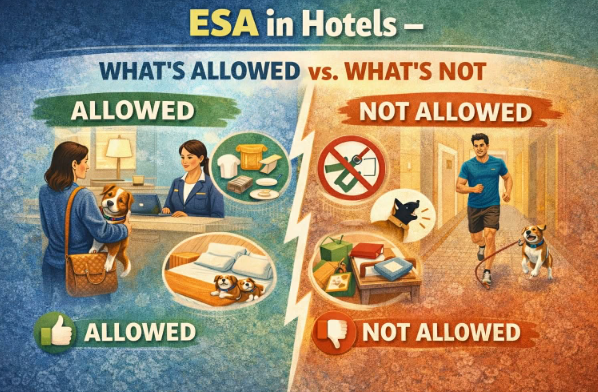
Emotional Support Animals (ESAs) are becoming more common, especially for travelers who rely on their pets for comfort. But when it comes to hotels, things can get confusing fast. Many pet owners assume that ESAs have the same rights as service dogs. Unfortunately, that’s not always the case. Hotels follow specific rules, and knowing the ESA Hotels policy can save you from unwanted surprises during your stay.
In this blog, we’ll break down exactly what’s allowed, what’s not, and how to handle situations where your ESA might not be accepted.
ESAs vs Service Dogs: Access Basics
The biggest source of confusion comes from mixing up service dogs and emotional support animals. The law separates them clearly.


- Service Dogs – These animals are protected under the Americans with Disabilities Act (ADA). They are trained to perform specific tasks like guiding the blind, alerting to seizures, or helping with mobility. Because of this, they have broad public access vs service dog rights. Hotels, restaurants, and most public places must legally allow them.
- Emotional Support Animals (ESAs) – These companions offer comfort through their presence. They are recognized under housing laws but do not have the same level of public access rights as service dogs. Hotels and restaurants are not required to accept them unless they already follow a pet-friendly model.
In short, a service dog must be allowed into a hotel, but an ESA does not enjoy the same guaranteed entry. That’s why it’s so important to understand the hotel’s policy before booking your stay.
If you plan on traveling with your ESA, make sure your documents are up to date. Explore ESA letter packages to strengthen your support and make life easier with landlords or housing providers.
Housing vs Public Access
ESA housing rights are protected under the Fair Housing Act. That means if you live in an apartment, dorm, or rental home, landlords must make reasonable accommodations for your ESA, even in “no-pet” buildings. A valid ESA letter from a licensed mental health professional is usually required.
Hotels, however, don’t fall under this category. They are considered public accommodations, not permanent housing. Because of that, hotels are not legally required to accept ESAs. Some may allow them voluntarily, especially if they already permit pets, but it’s always a business choice rather than a legal right.
This distinction surprises many ESA owners. You may have no trouble living with your animal in college housing or apartments, yet find roadblocks when booking a hotel for a short trip.
If you don’t have documentation yet, it’s worth reading about how to get an ESA letter from licensed professionals.
How to Ask Politely
When a hotel doesn’t clearly list its ESA policy online, it’s always safer to ask before your trip. This avoids awkward situations at check-in and gives you time to prepare if the hotel does not allow ESAs. The way you phrase your question can make a big difference. Being polite, direct, and respectful increases your chances of a positive response.
Scripts for Conversations
Here are some examples you can use when calling or emailing a hotel:
- If you haven’t booked yet:
“Hello, I’m considering making a reservation and wanted to confirm your hotel’s policy on emotional support animals. I travel with my ESA, and I’d like to understand any requirements before booking.”
- If you already booked:
“I have a reservation for [date]. Could you please clarify your policy regarding emotional support animals? My ESA will be accompanying me, and I want to make sure I follow your hotel’s rules.”
These polite scripts show that you respect the hotel’s guidelines and that you want to work with them rather than surprise them at check-in.
Documentation to Bring
Even though hotels are not legally required to allow ESAs, some may permit them if you provide the right documentation. Having your paperwork ready shows responsibility and increases your chances of being accommodated. Here’s what you should prepare:
- A valid ESA letter – This should be issued by a licensed mental health professional and confirm your need for an ESA. An up-to-date letter carries weight and adds legitimacy to your request.
- Vaccination and health records – Hotels want to ensure all animals staying on their property are safe and healthy. Proof of vaccinations (especially rabies) and basic health checkups demonstrate that your ESA won’t pose a risk to other guests.
- Proof of training or obedience – While not legally required, certificates showing that your ESA has completed basic obedience classes can make hotel staff more comfortable. It reassures them that your animal will be well-behaved in a shared space.
Carrying these documents doesn’t mean the hotel is obligated to accept your ESA, but it makes you appear organized, respectful, and considerate of their rules. In many cases, this level of preparation helps staff feel more confident about your stay and may increase your chances of a “yes.”
When You Can Be Asked to Leave
Even in hotels that accept pets or allow ESAs, owners are expected to follow certain rules. Having permission to bring your ESA doesn’t mean unlimited freedom. If your animal disrupts the hotel environment or creates safety concerns, staff have the right to step in. In some cases, this can even mean being asked to leave before your stay is finished.
Some of the common reasons include:
- Excessive noise – If your ESA barks, whines, or makes constant noise that disturbs other guests, hotel staff may not tolerate it for long. Guest comfort is always the top priority.
- Property damage – Chewing furniture, scratching doors, or leaving messes on carpets can lead to serious complaints. Not only could this result in removal, but you may also face cleaning or repair charges.
- Aggressive behavior – If your ESA growls, lunges, or shows aggression toward staff or other guests, hotels are within their rights to ask you to leave immediately for safety reasons.
- Poor hygiene or lack of control – Animals that are not clean, shed excessively, or appear poorly cared for can be considered a health concern. Similarly, if you cannot keep your ESA under control in public areas, it may raise liability issues for the hotel.
The key here is responsibility. Hotels are businesses, and their goal is to protect the comfort and safety of all their guests. If your ESA is calm, clean, and well-behaved, you are far less likely to face problems.
See also: The Growing Demand For CPAs In Healthcare Accounting
College/Workplace Special Notes
College housing ESA policies are different from hotel stays. Since student dorms and college apartments fall under the Fair Housing Act, schools are required to make reasonable accommodations for students with ESAs. A legit ESA letter is usually necessary, and schools may ask for documentation confirming your animal’s role in supporting your mental health.
Workplaces, on the other hand, do not fall under the same rules. While the Americans with Disabilities Act requires employers to allow service animals in most situations, the same is not true for ESAs. Some workplaces adopt flexible workplace policies and may allow ESAs at the discretion of management, but there is no legal requirement for them to do so.
This means an ESA could be permitted in your dorm room but not in your classroom. Or it may be welcome in a small, progressive office but not in a large corporate building. Each setting has its own standards, so clear communication is always the best first step.
Conclusion
Understanding the ESA hotels policy is about knowing the line between housing rights and public accommodation rules. At home or in college dorms, ESAs are often protected. But in hotels, things are different – it’s up to the business whether they accept your animal.
If you’re planning to travel, prepare ahead of time:
- Call the hotel before booking.
- Have documents like your ESA letter and vaccination records ready.
- Be respectful of the hotel’s decision, even if they decline.
The clearer you are, the smoother your experience will be.
If you need official paperwork for your ESA, explore ESA letter packages. Having proper documentation makes it easier to secure housing, navigate college accommodations, and show responsibility when traveling.
FAQs
1. Are hotels legally required to allow ESAs?
No. Hotels are considered public accommodations, not housing. They are not legally required to allow ESAs. Some may allow them voluntarily, especially if they already welcome pets.
2. Do ESAs have the same access rights as service dogs?
No. Public access vs service dog rights differ. Service dogs are covered by the ADA and must be allowed in hotels, restaurants, and most public places. ESAs do not have this legal protection.
3. Can a hotel charge me extra for bringing an ESA?
Yes, since hotels are not required to accommodate ESAs, they can choose to charge pet fees, deposits, or cleaning charges. Always ask in advance to avoid surprise costs.
4. What documents should I bring if a hotel does allow ESAs?
A valid ESA letter, vaccination records, and proof of training (if available). Even if not required, these documents show responsibility.
5. What if my ESA is denied at check-in?
If the hotel does not accept ESAs, they are within their rights. You can either make other arrangements or book at a pet-friendly hotel. Always confirm before you travel.