Bolted joints face enormous pressure in industrial settings, and choosing the wrong fastener can lead to costly failures. The difference between a standard bolt and one designed with integrated load distribution often determines whether a connection holds or fails under demanding conditions.
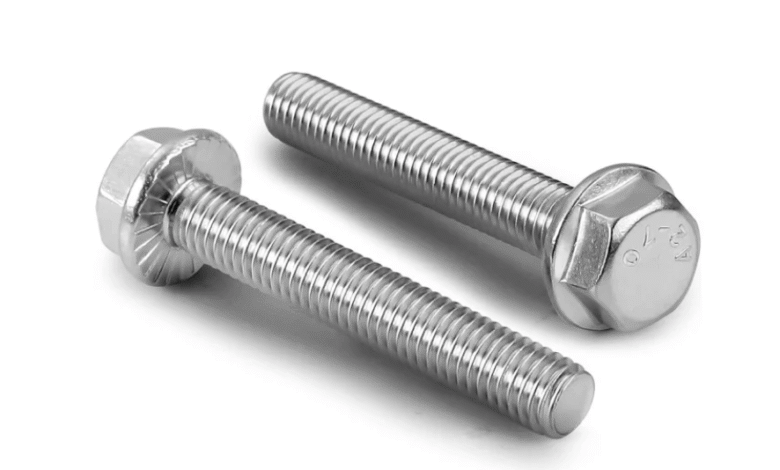
Flange bolts represent a significant advancement in fastener engineering, particularly when stress levels push conventional solutions to their limits. Hex flange bolts combine a traditional hex head with an integrated washer-like flange that sits directly beneath the bolt head. This design creates a larger bearing surface that distributes clamping force more evenly across the joint, eliminating the need for separate washers.
The Structural Benefits of Integrated Flanges
Greater Load Distribution Across Joint Surfaces: The primary advantage of flange bolts lies in their ability to spread compressive forces over a wider area. When you tighten a standard bolt, the clamping force concentrates directly under the bolt head, creating high stress points. A flange bolt’s wider bearing surface reduces this pressure concentration, protecting the material beneath and maintaining consistent tension.


Reduced Material Deformation Under High Torque: Flange bolts excel in applications involving aluminium or thin sheet metal where standard bolts might crush the substrate. The integrated flange acts as a built-in stress distributor, preventing localised damage that often occurs when high torque specifications require significant tightening force. This becomes especially critical in automotive and aerospace assemblies.
Enhanced Grip and Vibration Resistance: The increased surface contact between the flange and the workpiece creates friction that resists rotation and loosening. In environments with constant vibration, machinery movement, or thermal cycling, this additional grip maintains joint integrity far longer than conventional bolt and washer combinations. The flange’s continuous contact eliminates shifting between components.
Eliminating the Washer Variable
Single-Component Reliability: Traditional bolted joints require careful washer selection and placement, introducing variables that affect joint quality. Will the washer sit flat? Is it the correct grade? Can it shift during installation? Flange bolts remove these questions entirely by incorporating the load-spreading function directly into the fastener design, ensuring consistent performance.
Time and Cost Efficiency in Assembly: Production lines and maintenance operations benefit significantly from reduced component handling. Each flange bolt replaces what would otherwise be a two or three-piece assembly, cutting parts inventory, reducing installation time, and lowering the chance of missing components. For large-scale manufacturing or field repairs, these efficiency gains translate into labour cost savings.
Improved Quality Control: When fastening quality depends on multiple components working together, inspection becomes more complex. Flange bolts present a single item to verify, making quality assurance more straightforward. The flange is already part of the bolt, manufactured to precise tolerances as an integrated unit, eliminating additional verification steps.
Performance Advantages in High-Stress Applications
Flange bolts demonstrate their value most clearly in demanding mechanical environments. Consider heavy machinery subjected to continuous operation, automotive suspensions experiencing repeated impact loads, or structural connections bearing significant weight. These applications generate forces that can gradually loosen standard fasteners, leading to joint failure or catastrophic breakdown.
Critical Performance Characteristics: The enhanced bearing surface of flange bolts means they maintain higher preload levels over extended periods. Preload refers to the tension created in a bolt when properly tightened, which keeps the joint compressed and prevents relative movement. Higher sustained preload equals better joint integrity, less fatigue damage, and longer service life.
Material Compatibility and Versatility: Flange bolts work effectively across diverse base materials. Whether you’re fastening steel to steel, securing components to aluminium housings, or working with composite materials, the integrated flange provides appropriate load distribution without requiring material-specific washers. This versatility simplifies specification and inventory management whilst ensuring reliable performance.
Engineering Considerations for Optimal Selection
Selecting Appropriate Flange Diameter: Not all flange bolts offer identical bearing surfaces. The flange diameter relative to the bolt size determines how effectively load distributes across the joint. Larger flanges provide greater surface area but may not fit in space-constrained applications. Engineers must balance the load distribution benefits against clearance requirements and aesthetic considerations.
Thread Engagement and Fastener Length: Proper thread engagement remains critical regardless of head design. The flange provides superior clamping at the head end of the joint, but the threaded portion still requires adequate engagement to develop full tensile strength. Calculate fastener length to achieve complete thread engagement whilst accounting for flange thickness.
Coating and Corrosion Protection: Many flange bolts receive protective coatings to enhance corrosion resistance and extend service life in harsh environments. Zinc plating, zinc-nickel coatings, and organic finishes each offer different levels of protection. The flange’s increased surface area means more material requires coating, but this also provides additional protection where moisture might accumulate.
Common Applications Across Industries
Flange bolts find extensive use wherever reliable fastening under stress matters:
- Automotive chassis and suspension systems where vibration resistance and consistent clamping force prevent loosening and maintain alignment.
- Agricultural and construction equipment subjected to shock loads, dust, and harsh environmental conditions requiring dependable connections.
- HVAC systems and ductwork installations where the large bearing surface prevents damage to thin sheet metal whilst providing secure attachment.
- Electrical panel assembly and enclosure manufacturing where the integrated flange eliminates loose washers that might interfere with electrical components.
Conclusion
Flange bolts offer measurable advantages in applications where joint integrity directly impacts safety, performance, and operational costs. The integrated flange design distributes loads more effectively than standard bolt and washer combinations, reduces assembly complexity, and maintains superior grip under demanding conditions. For engineers and maintenance professionals seeking to improve fastening reliability, flange bolts represent a practical solution backed by sound mechanical principles. Evaluate your current fastening challenges to determine where this technology might enhance connection quality.